
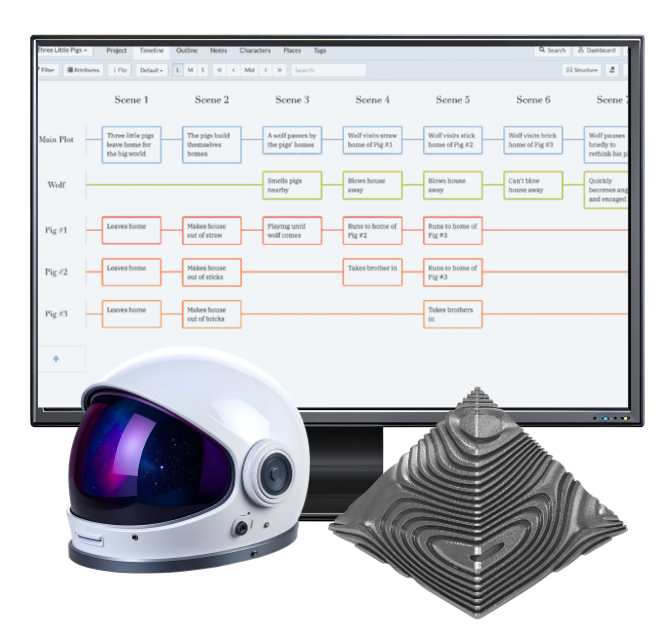
Plot Your Sci-Fi Novel in Hours, Not Weeks
8 genre-specific Plottr templates with ready-to-use beat sheets, character archetypes, place profiles, and external plot engines. Drag, drop, write.
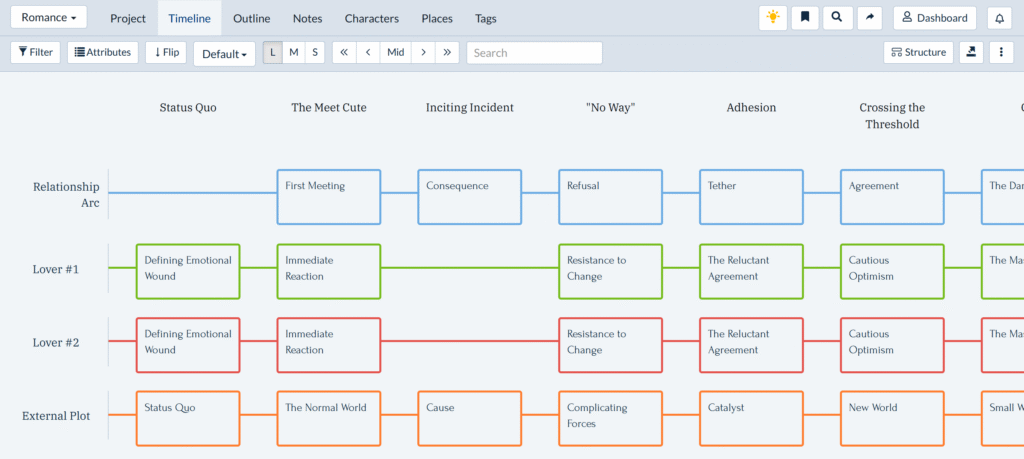
Staring at a Blank Timeline?
Don't be lost figuring out the closed-loop ecology, the founders' coherence problem, or the structural beats that keep hard SF readers turning pages.
Presenting beat sheet templates that give you the why.
Complete antagonist psychology. Detailed scene-level guidance. Map out your story without reaching the midpoint and wondering "what happens next and why should the reader care?"
Sci-Fi Templates That Actually Understand Sci-Fi
These aren't generic three-act outlines with a spaceship at the end.
Each template is built from the ground up for its specific story type, with the structural architecture that makes sci-fi work.
Story Beats
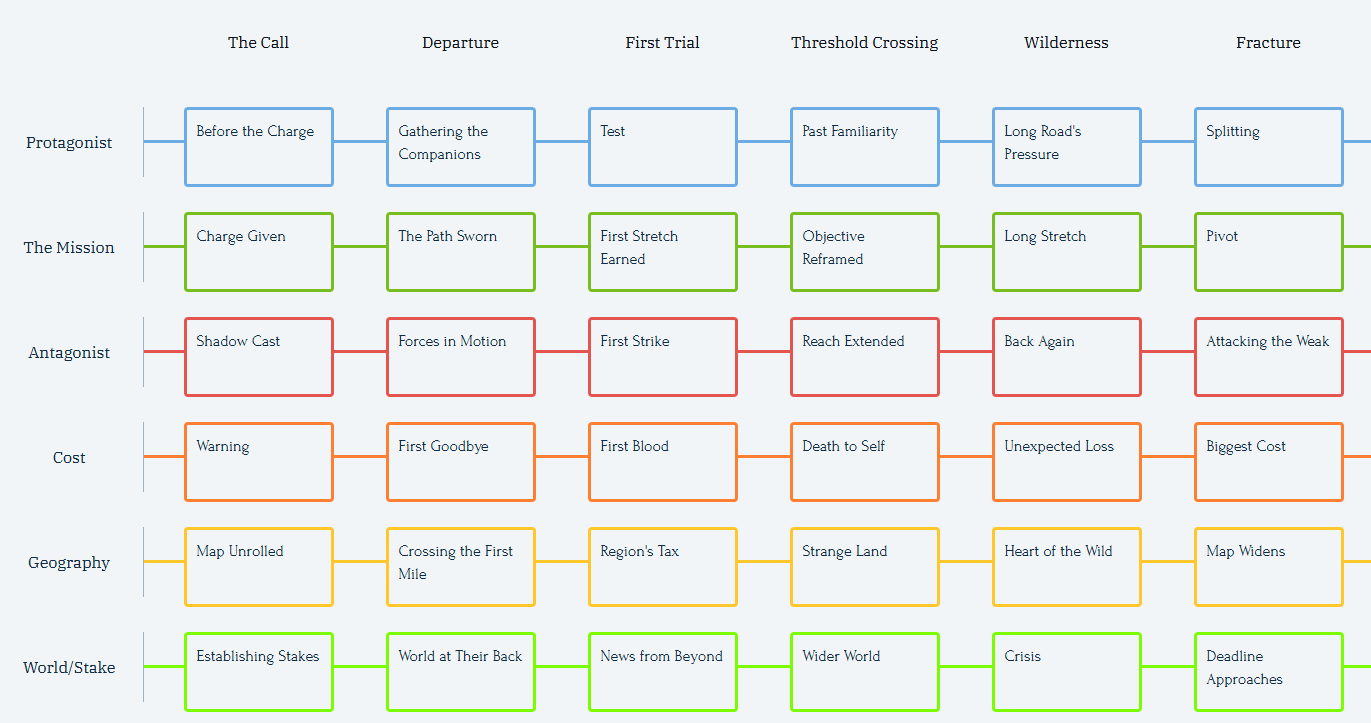
8-10 beats per template with 40+ scene cards with Goals, Key Points, Traps (common mistakes), and Escalation tracking for each lane.
Character Archetypes
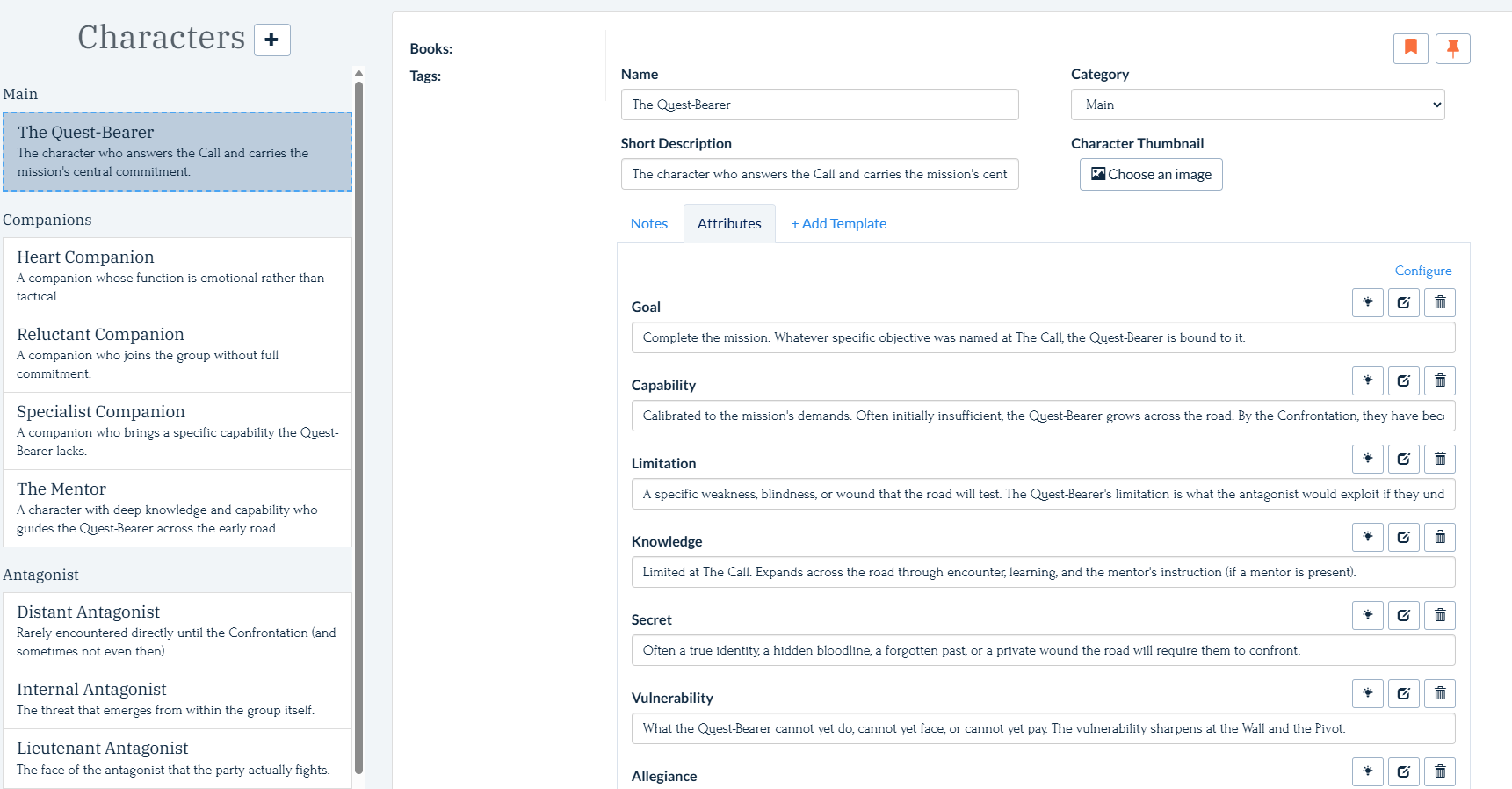
Genre-specific character profiles with the exact fields you need: capability, limitation, pressure response, moral code, and arc direction
Plot Engines
Stuck on your external plot? Plug-and-play engines give you instant story scaffolding for every subgenre
8 Subgenres. 8 Complete Systems.
The protagonist’s perceived reality is generated by something else. They wake up, sometimes at once and sometimes in stages, to the recognition that what they took for the world is a constructed surface. Covers simulation stories, conditioned dreams, manufactured experiences, augmented overlays, and any story where the question “what is actually happening?” runs deeper than what the protagonist can see. 8 beats across 5 lanes including a dedicated Reality lane that tracks the System’s grip and the protagonist’s awakening.
Subgenres covered: Simulation thrillers (The Matrix, Inception, Recursion by Blake Crouch), conditioned reality (The Truman Show, Vanilla Sky, Dark City), corporate or scientific perception override (Devs, They Live), VR-trapped narratives (Ready Player One variants, Sword Art Online).
Includes:
- Story beats across 5 lanes
- Character archetypes (The Subject, The Operator, The Insider, The Witness)
- Three Awakening Types: Sudden, Gradual, Refused
- Location archetypes including The Constructed Site and The Glitch Site
The protagonist’s identity has been designed by someone else. They discover that their memories, behaviors, body, or motivations are not their own. Covers manufactured personalities, conditioned operatives, implanted memories, designed bodies, and any story where the protagonist must reckon with a self they did not author. 8 beats across 5 lanes including a dedicated Memory lane that tracks the gap between what they remember and what was done to them.
Subgenres covered: Manufactured identity (Total Recall, The Bourne Identity, Dollhouse), designed body or AI-self (Westworld host arcs, Murderbot, Detroit: Become Human), corporate or institutional conditioning (Severance, Altered Carbon, The Manchurian Candidate updated), trained operative reckoning with origins (La Femme Nikita lineage).
Includes:
- Story beats across 5 lanes
- Character archetypes (The Override, The Maker, The Remnant, The Trigger)
- Four Override Types: Implanted Memory, Conditioned Behavior, Manufactured Identity, Designed Body
- Location archetypes including The Maker’s Site and The Pre-Edit Trace
The protagonist is living through the same period more than once, or exists in more than one version. They must figure out the exit condition, the variant logic, or the anchor that breaks the recursion. Covers time loops, multiverse branches, quantum variants, and re-simulations. 8 beats across 5 lanes including a dedicated Loop lane that tracks each iteration’s particular state.
Subgenres covered: Time loop stories (Edge of Tomorrow, Russian Doll, Palm Springs, Source Code, Groundhog Day’s sci-fi heirs), multiverse branches (Dark, Loki, Everything Everywhere All at Once in sci-fi mode), quantum-variant fiction (The First Fifteen Lives of Harry August, Recursion), re-sim and resurrection stories (Mickey7, video-game-loop sci-fi).
Includes:
- Story beats across 5 lanes
- Character archetypes (The Iterator, The Anchor, The Variant, The Exit Witness)
- Four Loop Types: Time Loop, Multiverse Branch, Quantum Variant, Re-Sim
- Location archetypes including The Loop Anchor and The Exit Condition Site
The protagonist is positioned inside a conflict that spans worlds, fleets, or systems. They must act with effect at a scale that exceeds any individual decision while still carrying personal stakes. Covers fleet warfare, imperial politics, insurgencies, dynastic conflict, and frontier confrontations. 8 beats across 5 lanes including a dedicated Theater lane that tracks the operational scale of the conflict.
Subgenres covered: Classic and modern space opera (Foundation, Dune and Children of Dune, The Expanse, Old Man’s War, Ancillary Justice, Honor Harrington), military SF (Ender’s Game lineage, The Forever War), imperial politics (Babylon 5, A Memory Called Empire), insurgent and rebellion narratives, dynastic SF (Sun Eater, the long-arc operatic tradition).
Includes:
- Story beats across 5 lanes
- Character archetypes (The Soldier, The Adversary, The Crew, The Civilian)
- Four Theater Types: Fleet War, Insurgency, Imperial Politics, Frontier
- Location archetypes including The Command Site and The Civilian Hold
A new technology, system, or capability is being weaponized. The protagonist must figure out what is being done, who benefits, and how to stop it before the damage is irreversible. Set close enough to now that the reader recognizes the world. 8 beats across 5 lanes including a dedicated System lane that tracks the technological architecture as a separate entity from any human antagonist.
Subgenres covered: Near-future tech thrillers (Black Mirror in long form, William Gibson’s The Peripheral and Agency, The Circle, Daemon by Daniel Suarez), corporate-tech conspiracy (Mr. Robot’s sci-fi cousins, Cory Doctorow’s near-future), surveillance and data exploitation stories, AI deployment thrillers, biotech misuse narratives.
Includes:
- Story beats across 5 lanes
- Character archetypes (The Witness, The Beneficiary, The Operator, The Ally)
- Four Traps: Infrastructure, ROI, Coercion, God-Machine
- Location archetypes including The Public Surface and The Operations Hub
A community has been sealed away from the wider world for long enough that the seal has become the world. The protagonist begins to notice contradictions the official story cannot accommodate. They assemble three pieces of evidence (biological, architectural, historical) into a truth that cannot be unknown. Covers silos, generation ships, enclaves, and founded societies. 8 beats across 5 lanes including a dedicated Truth lane that tracks the physical contradictions bleeding through the seal.
Subgenres covered: Silo and bunker fiction (Hugh Howey’s Silo trilogy (Wool, Shift, Dust), generation ship fiction (Aurora by KSR, Spaceborn Few by Becky Chambers, Lucia Expedition by Mory Grant), enclave stories (Snowpiercer, The Village, the Ark in The 100, City of Ember), founded society fiction (The Giver by Lois Lowry, Brave New World by Aldous Huxley, Logan’s Run).
Includes:
- Story beats across 5 lanes
- Character archetypes (The Questioner, The Authority, The Founder, The Crowd)
- Four Execution Constraints: Seal, Founder’s Coherence, Lived Culture, Layered Revelation
- Location archetypes including The Boundary and The Founder’s Site
The protagonist must solve a real engineering, physical, or biological problem under indifferent natural law. Physics does not negotiate. Covers survival SF, first-contact hard SF, planetary engineering, and any story where the science is the antagonist. 8 beats across 5 lanes including a dedicated Clock lane that tracks the closing window inside which the math still permits a solution.
Subgenres covered: Survival hard SF (The Martian, Project Hail Mary by Andy Weir, Mickey7), planetary engineering (Kim Stanley Robinson’s Mars trilogy, Aurora, The Ministry for the Future), first-contact hard SF (Children of Time by Tchaikovsky, Blindsight by Peter Watts, The Three-Body Problem), catastrophe hard SF (Seveneves, Lucifer’s Hammer).
Includes:
- Story beats across 5 lanes
- Character archetypes (The Solver, The Problem, The Crew, The Clock)
- Four Litmus Tests: Conservation, Clock, Paradigm, No New Variables
- Location archetypes including The Workspace and The Hostile Environment
The protagonist seeks a place, a vessel, or a found community in the wider sci-fi world. Stakes are personal: belonging, healing, the long quiet life. Covers found-family ship crews, settlement stories, low-stakes encounters, slice-of-life space, solarpunk. 8 beats across 5 lanes including a dedicated Bond lane that tracks the relationships forming inside the vessel or settlement.
Subgenres covered: Becky Chambers’ Wayfarers (The Long Way to a Small Angry Planet, A Closed and Common Orbit, Record of a Spaceborn Few), Travis Baldree’s space-adjacent cozy work, A Psalm for the Wild-Built (Chambers), solarpunk settlements, found-family crew stories, post-apocalyptic small-community sci-fi where rebuilding is the point.
Includes:
- Story beats across 5 lanes
- Character archetypes (The Drifter, The Crew, The Visitor, The Place-Keeper)
- Three Bond Configurations: Found Family, Two-of-Us, The Settlement
- Location archetypes including The Vessel and The Quiet Spot
Everything You Need to Plot Faster
Complete Plottr Files
8 complete Plottr template files. Import and start plotting. No setup required.
Place Archetypes
Pre-built location profiles with operational signatures, control levels, and the field details to make every scene land.
Detailed Scene Beats
Every beat includes Goals, Key Points, Traps (common mistakes to avoid), and Escalation tracking to keep your story building.
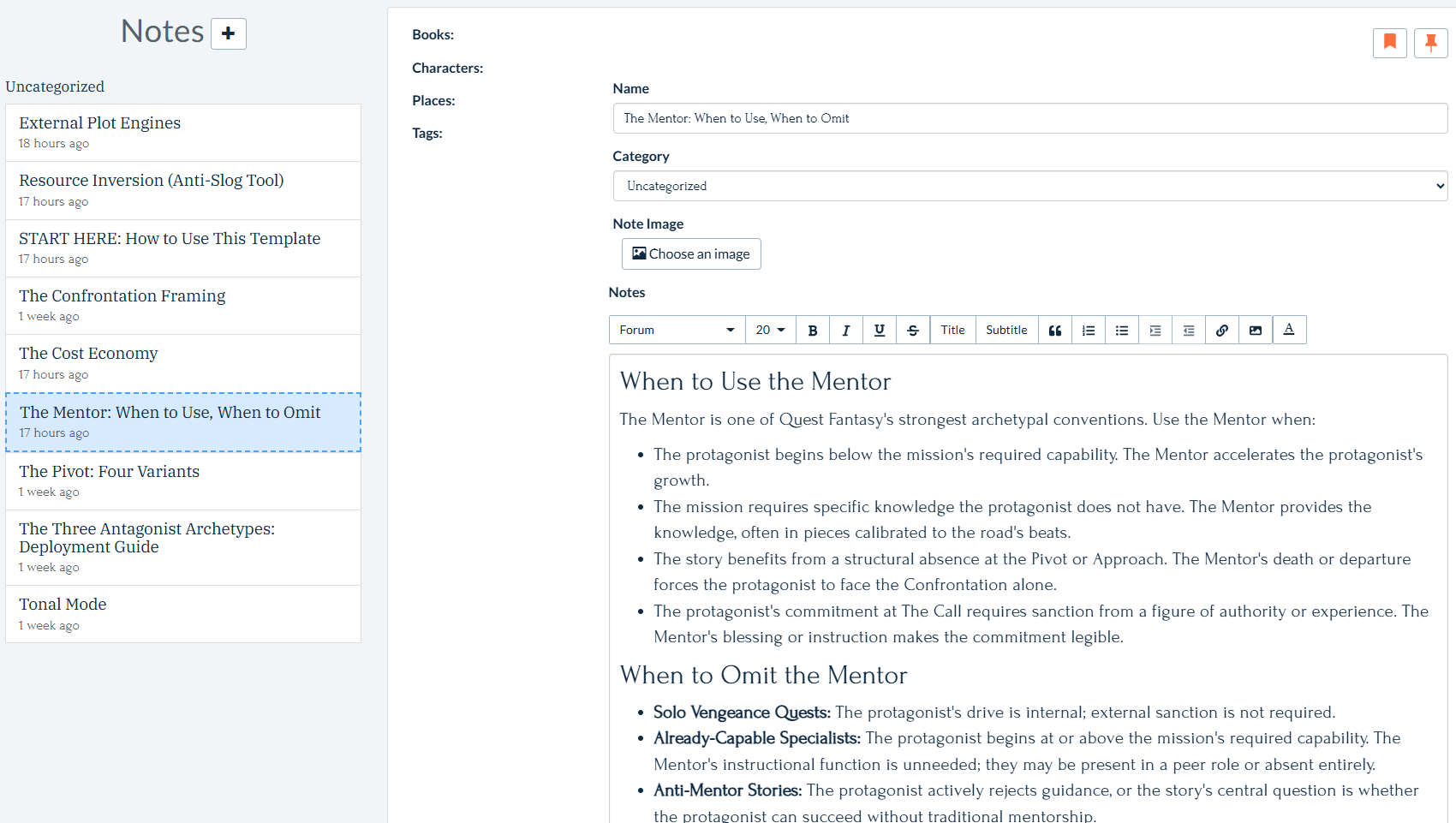
Notes
World-building rules, magic system checklists, series planning tools, and craft guidance built into the templates.
Character Archetypes
Genre-specific character profiles with fields for capability, limitation, pressure response, moral code, allegiance, and arc direction, so you know how your characters act when the stakes are highest.
Lifetime Access
Pay once and access all 8 Sci-Fi Roadmap templates forever (with an active Plottr account).

Stop Rebuilding Your Plot Structure From Scratch
Get 8 complete sci-fi templates.