
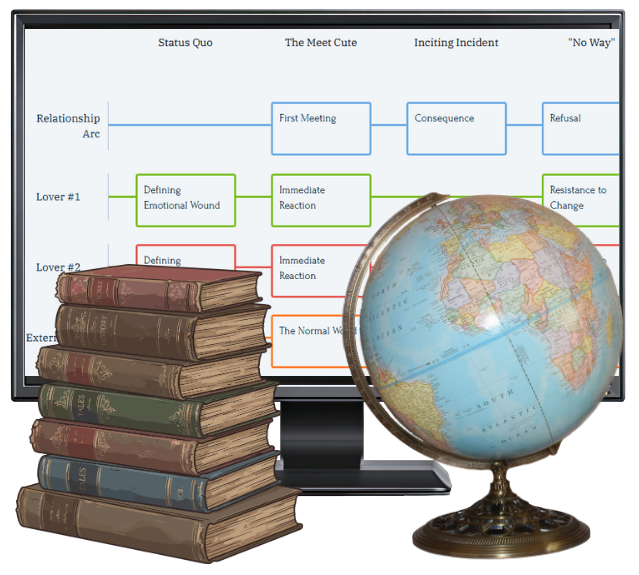
Structure Your Historical Novel
Like a Pro
6 templates built for the historical fiction you're actually writing. Drag, drop, write.
Your Grid + Your Historical World
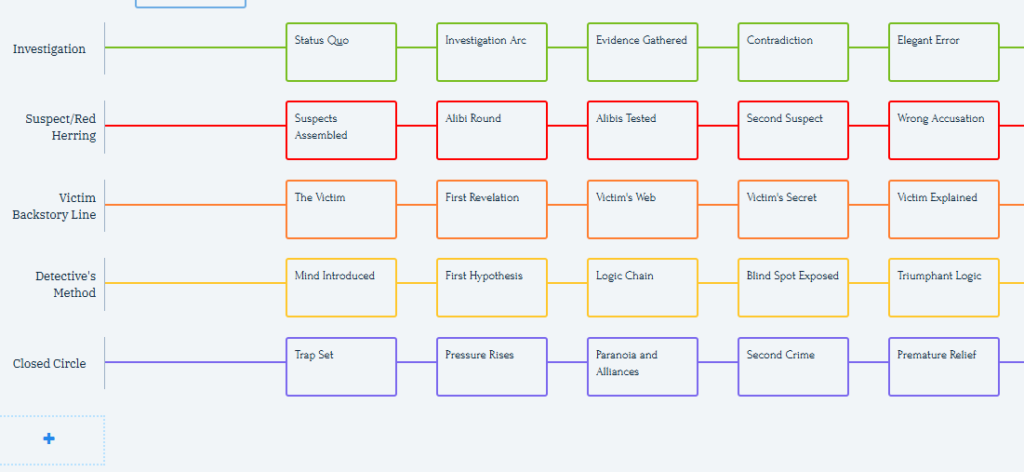
The visual timeline that lets you see your plot in action. Drag and drop scenes, track what's on the page and what still needs work, and organize your Story Bible. No more flat historical backdrops.
7 subgenre-specific historical fiction frameworks that ask you the right questions in the right order. It's like having a historical fiction editor at your side as you develop and refine your story.
Historical Fiction Frameworks Built for the Genre
These aren't generic novel templates with period costumes bolted on.
Each framework is built from the ground up for its specific historical pressure, with the structural architecture that makes historical fiction work and the craft guardrails that keep periods, real figures, and documented events on the page with the fidelity serious historical fiction readers demand.
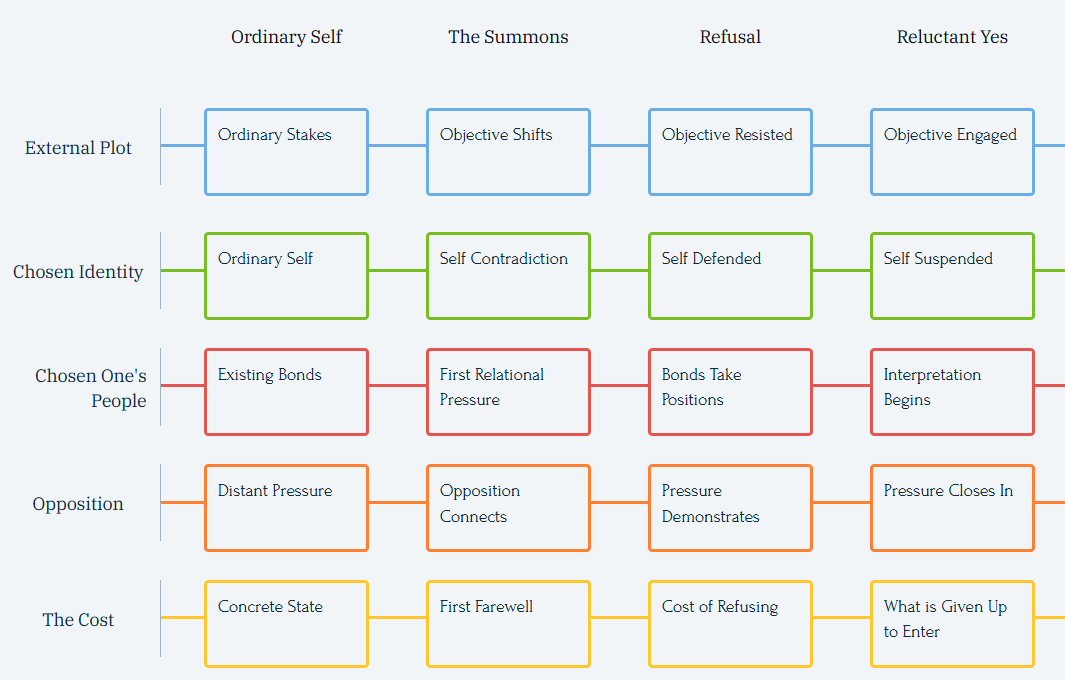
Timeline Grid
Cards with Beat Purpose, What Happens, Character State, The Trap, The Pivot, Historical Grounding Notes, and an engine-specific overlay for every function.
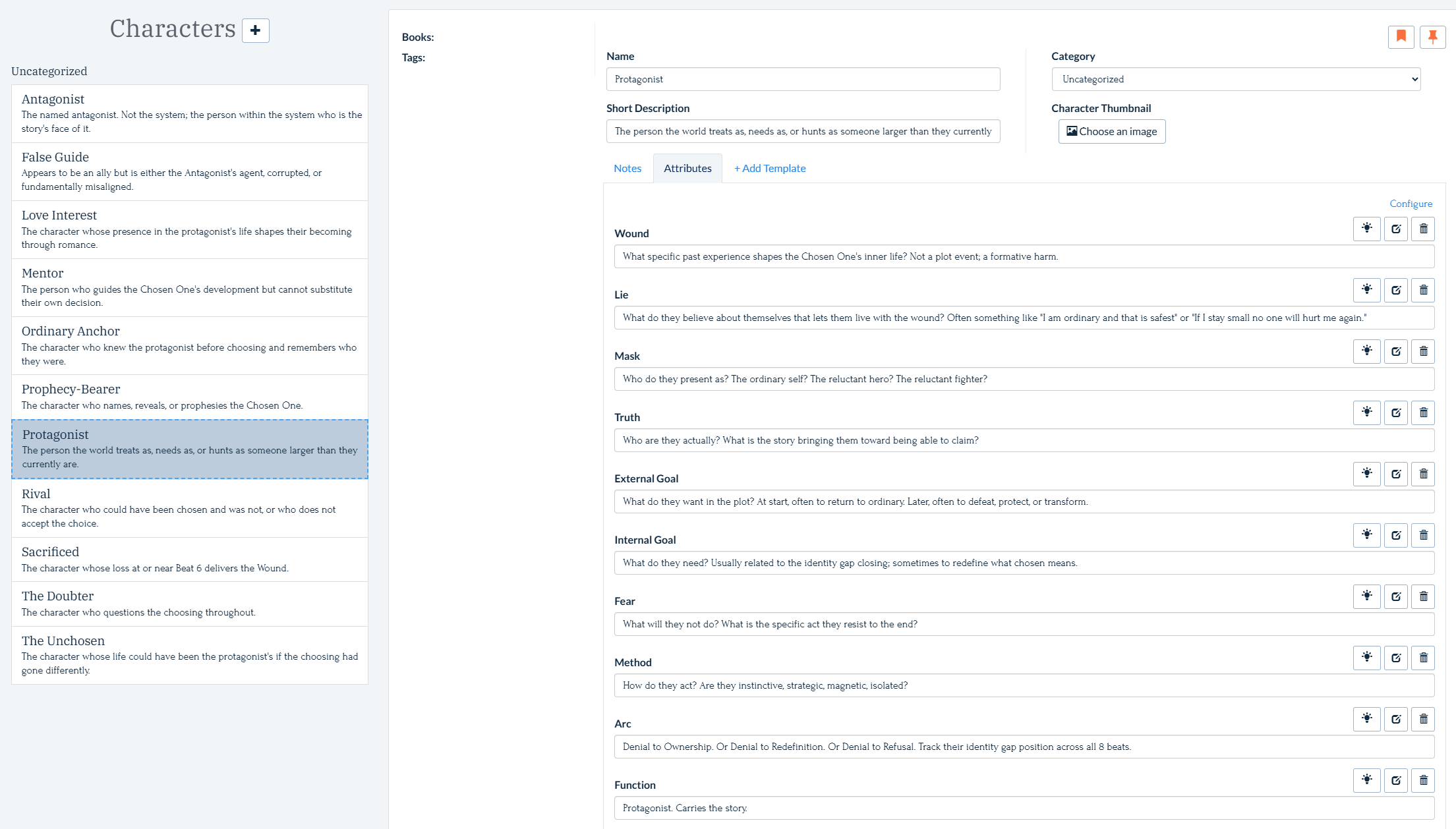
Character Archetypes
Subgenre-specific archetypes per template with full profiles for each, including protocols for writing real historical figures.
Craft Guardrails
Dedicated craft sections for each pressure’s central challenges: authorial standpoint, historical grounding, showing every side whole, outcomes spectrum, and more.
6 Subgenres. 6 Complete Frameworks.
The historical novel of movement across borders, oceans, and generations. Covers refugee flight, chosen emigration, forced displacement, enslavement and the Middle Passage, circular labor migration, imperial settlement, and the second-generation inheritance the migration produced. What was left behind, what was carried, what was made in the destination, and what the children remember.
Includes:
- Story functions across 5 lanes (The Character, The Three Places, What Gets Carried, The People, Who Decides)
- Character archetypes (The Migrant, The One Who Stayed, The Fellow Traveler, The Native of Destination, and more)
- Place archetypes (The Standing Home, The Departure Site, The Crossing, The Threshold Place, and more)
The historical novel of being close to someone whose word can lift you up or ruin you: a king, a queen, an emperor, a pope, or any figure whose favor decides your fate. Covers Tudor, Regency, Roman, Byzantine, Chinese imperial, papal, and dynastic settings. What you have to become to stay close, what you lose when you fall out of favor, and where you end up when your position is settled.
Includes:
- Story functions across 5 lanes (The Character, The Sovereign, The Court, The Rivals and Allies, The Price of Power)
- Character archetypes (The Rising Courtier, The Sovereign, The Rival, The Patron, The Favorite, The Deposed, and more)
- Place archetypes (The Throne Room, The Private Chamber, The Council Chamber, The Country Estate, The Prison, The Scaffold, and more)
The historical novel of the meeting of peoples at the edge where two worlds touch, and the transformation that meeting works on everyone in it. Covers first-contact narratives, colonial fiction, borderland cultures, settler-inhabitant relations, missionary encounters, and the descendants who inherit what the meeting made. What is exchanged, what is taken, what is destroyed, who adapts, and what new world emerges from the collision.
Includes:
- Story functions across 5 lanes (Character, Encounter, Worlds and the Land, Others in the Meeting, Cost and the Remaking)
- Character archetypes (The Arriver, The Inhabitant, The Go-Between, The Transformed, The Boundary-Maker, and more)
- Place archetypes (The Inhabited Home, The Contact Site, The Borderland, The Sacred Ground, and more)
The historical novel of ordinary life under military conquest and occupation. Covers WWII and its many theaters, colonial warfare, resistance and collaboration, home front and POW experience, contested contemporary occupations, and post-liberation reckoning. What can be kept, what must be given up, what the compromise costs, and what remains when the uniforms leave.
Includes:
- Story functions across 5 lanes (Character, Occupying Power, Community, Field of Response, Cost of Survival)
- Character archetypes (The Civilian Protagonist, The Occupier, The Resister, The Collaborator, The Intermediary, and more)
- Place archetypes (The Home Under Watch, The Occupied Public Space, The Border, The Meeting Point, and more)
The historical novel of political rising and its costs. Covers the French, American, Russian, Chinese, Haitian, and Iranian revolutions, and every uprising that reshaped a society or failed trying. What the old order held that was worth defending, what the rising required, whether the cause consumed its own, and what was made from the fire.
Includes:
- Story functions across 5 lanes (Character, Cause, Old Order, Factions, Price of Belief)
- Character archetypes (The Believer, The Leader, The Swept Up, The Loyalist, The Defector, and more)
- Place archetypes (The Old Order’s Seat, The Meeting Ground, The Barricade, The Prison, and more)
The historical novel of catastrophic events and community response. Covers plague, famine, natural disaster, industrial catastrophe, war-adjacent civilian collapse, and any historical event that upended a community’s world overnight. What holds when ordinary structures fail, what the community becomes under pressure, who is saved and who is lost, and what the disaster leaves behind.
Everything You Need to Organize Your Story
Complete Plottr Files
6 complete Plottr template files—import and start planning immediately. No setup required.
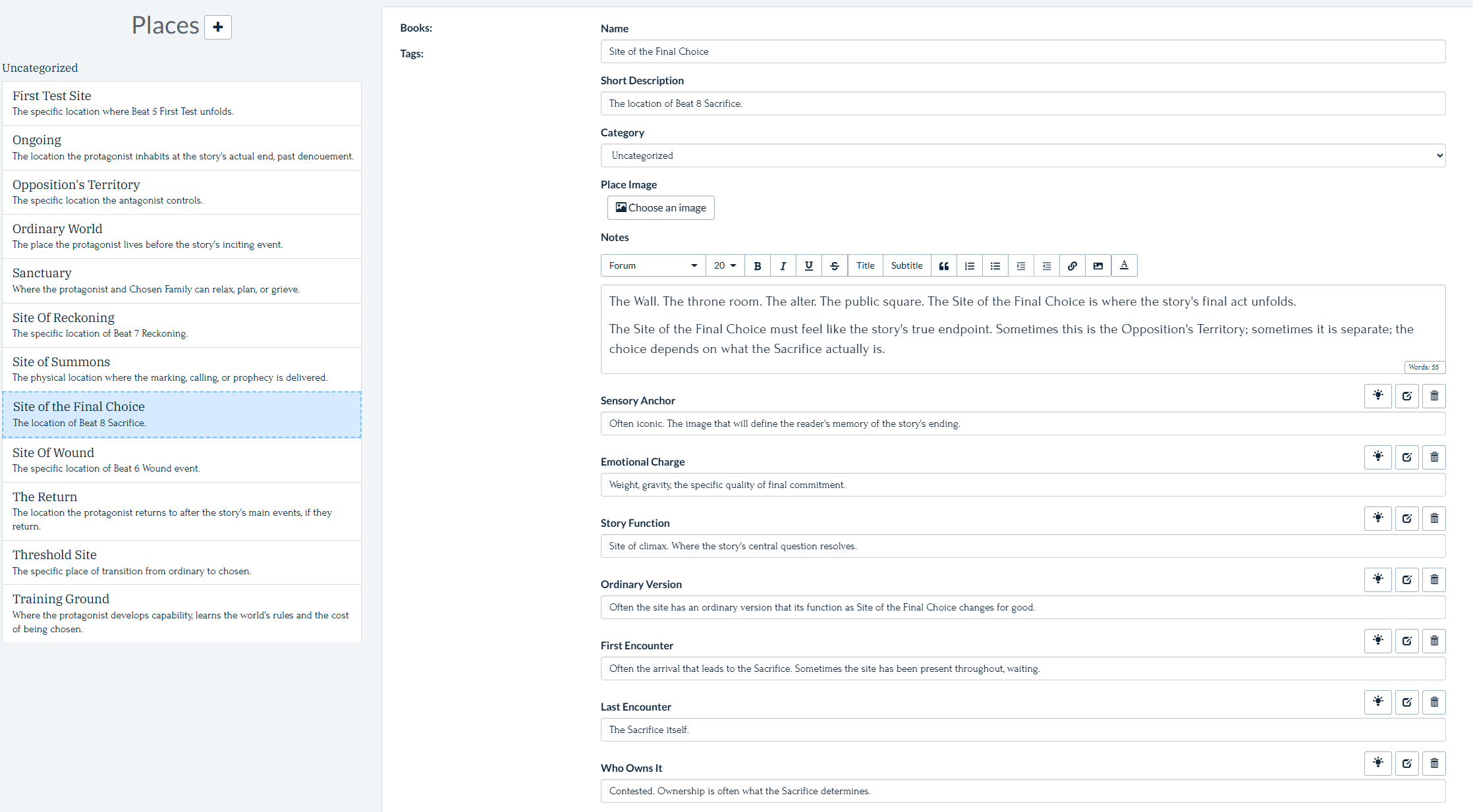
Place Archetypes
Places shown by historical role and function, not just settings. Throne rooms, borderlands, occupied streets, migration crossings, prison cells, country estates.
Detailed Prompt Cards
What story functions each historical pressure demands, with prompts to help you develop them, plus Historical Grounding Notes for every card.
Notes
How to get the most out of your beats, adjacent-engine distinctions, authorial standpoint frameworks, and through-line worksheets to help you write better.
Character Archetypes
Historical-pressure-specific character profiles with ten-field templates covering wound, lie, mask, truth, goals, fear, method, arc, and function. Real Historical Figures protocol included.
Lifetime Access
Pay once and access all 6 Historical Fiction templates forever (with an active Plottr account).

Stop Rebuilding Your Plot Structure From Scratch
Get 6 complete YA templates.